"As beautiful as the chance encounter, on a dissection table, of a sewing machine and an umbrella."
Lautréamont, The Songs of Maldoror (1869)
Evolution, as we have known since Borradaile, insists on the shape of the crab. The carapace flattens, the abdomen tucks in, and, not without a certain fatalism, the same old shape is adopted. Carcinization is the scientific name for this process of convergent evolution. The probable, given enough time, happens.
A language model is a machine of the probable. It predicts the next word from all the words it was trained on and chooses among the most plausible. Ask it for a science fiction story and it will hand you the average of the genre, its crab. The model is not mistaken when it converges. The crab isn't a bug; it's a feature.
I once gave the name desoficiación, the unmaking of craft, to what happens when execution gets cheap: craft goes sideways, and anyone can get in seconds what used to take months, or even years. There are crabs everywhere.
On the internet, the suffix maxxing refers to the extreme optimization of any activity. To the troubled cousins of looksmaxxing, proteinmaxxing and the rest, I propose weirdmaxxing: a process of optimization that pursues no external ideal, but rather an absolute retreat into whatever makes you you. Maximizing the distance between you and the average. Refusing, tooth and nail (and against carapaces and claws!), to turn into a crab.
The method is old and has a bad reputation: obsession. Obsession is everything that comes back, that bounces, that reverberates and insists. Under the yoke of the ephemeral, obsessions are the contemporary form of counterculture.
In The Songs of Maldoror, the table is the place where beauty is born. At the risk of sounding New Age, I maintain that we are all that table: the surface where distant things come together under the logic of our own obsessions.
Borges's Library of Babel contains every possible book, "all verbal structures, all the variations allowed by the twenty-five orthographic symbols, but not a single instance of absolute nonsense." Weirdmaxxing may well consist in the illusion of that imagined librarian who devotes his life to the useless task of finding some nonsense.
Language models can be thought of as subsets of Borges's Library of Babel. An LLM has every object in the world: sewing machines, umbrellas and, inevitably, tables. But none of them is exactly your table. The closest it can get to your table is a reflection, which in AI jargon is known as "the context window": the space where, prompt after prompt, the probabilities of the possible are rearranged.
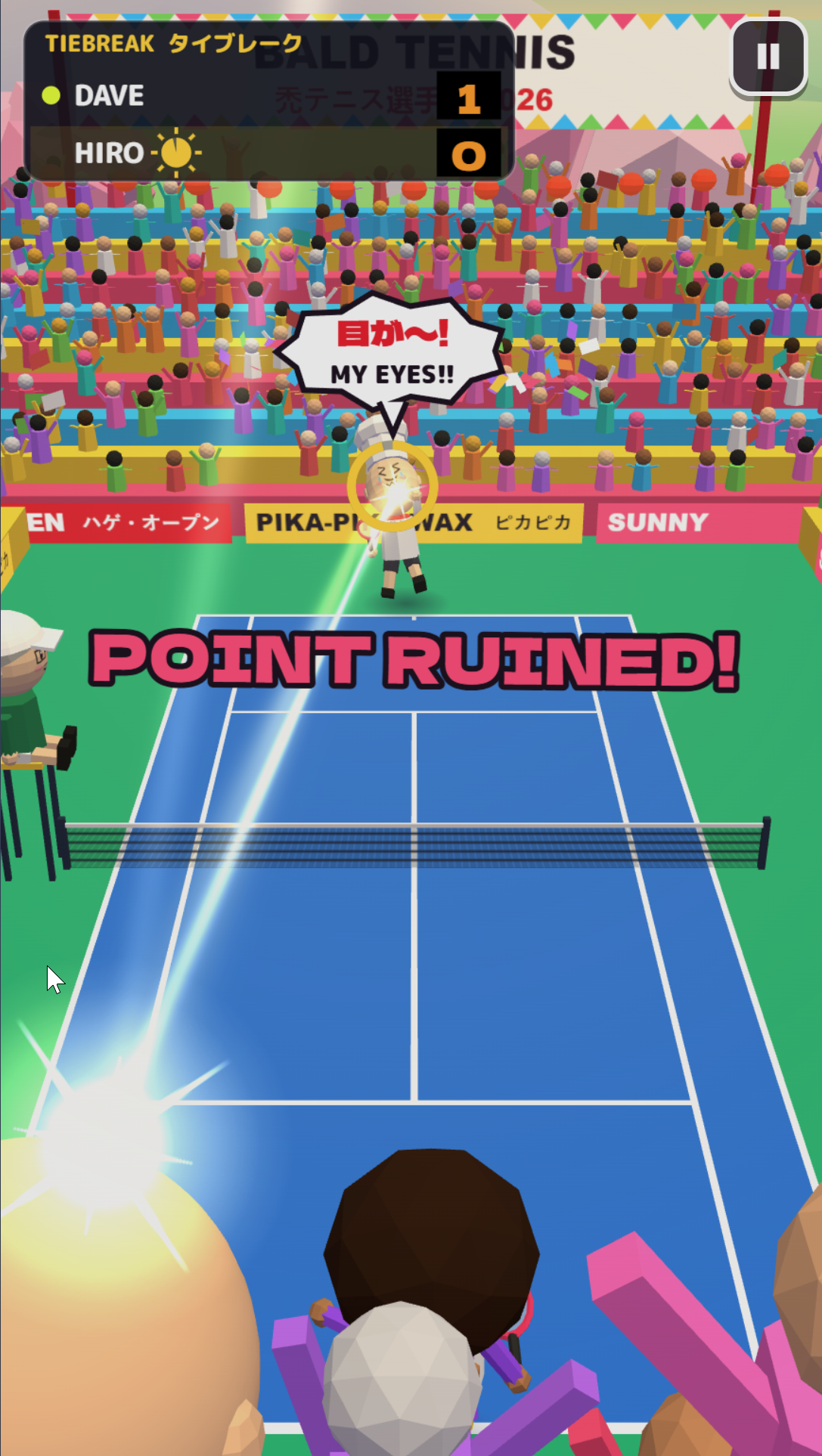
Yesterday I made "Bald Tennis," a game where two characters settle a tennis match in a tiebreak while you control the bald head of a spectator in the stands to blind them with the reflection of the sun. You can watch the whole match without intervening and see who wins, you can ruin a point or two, or you can ruin them all. You neither win nor lose; you just alter the outcome of a simulation. Is it a game? It doesn't matter. What I do know is that it isn't a crab.
And there lies the one thing the unmaking of craft cannot flatten. Not talent, not technique, not big ideas: the table, the whimsical intersection of your obsessions. To weirdmaxx is nothing more than to hold on tight to your table. Because crabs show up everywhere. But tables don't.