“I leave to the various futures (not to all) my garden of forking paths.”Jorge Luis Borges, The Garden of Forking Paths (1941)
Making something has always meant destroying possible worlds. Every decision closed doors. You chose a tone, a mechanic, an ending, and with each choice every possible version of the thing you were no longer going to make disappeared.
Artificial intelligence changed that. Today, going back to any fork in the tree is cheap. You can choose another path, see what’s there, come back and take a third. In Borges’s story, Ts’ui Pên writes a novel in which the protagonist doesn’t choose between alternatives but takes all of them at once. Today anyone can be Ts’ui Pên.
In In Praise of the Dissection Table I wrote about desoficiación, the unmaking of craft: the moment when execution gets cheap and craft goes sideways. I also wrote about the crab: just as evolution keeps insisting on that shape, a language model tends to converge toward the average of whatever you ask it for. Horizontal exploration is the most seductive consequence of the unmaking of craft. But you have to look carefully at what’s on each branch. Ask a model for ten variations of an idea and it gives you ten neighbors of the average. Ten slightly different crabs. Exploring horizontally with a machine of the probable is, almost always, walking the perimeter of the same beach.
When we were forced to go in a single direction, something else happened. The idea crashed into something, got stuck, hit friction and wouldn’t quite work. And since there was no going back, you had to solve it from the inside. That’s where what I call adjustment ideas were born: ideas that exist only to hold up another one, like the stake you drive next to a young tree so it grows where you want it to. A kind of scaffolding.
Often the result looks like a Rube Goldberg machine, a chain of patches and mechanisms that seem implausible at first glance. But the machine works, and it goes far. And nobody converges toward a Rube Goldberg machine. There’s no carcinization possible for something built by solving problems only you thought to solve.
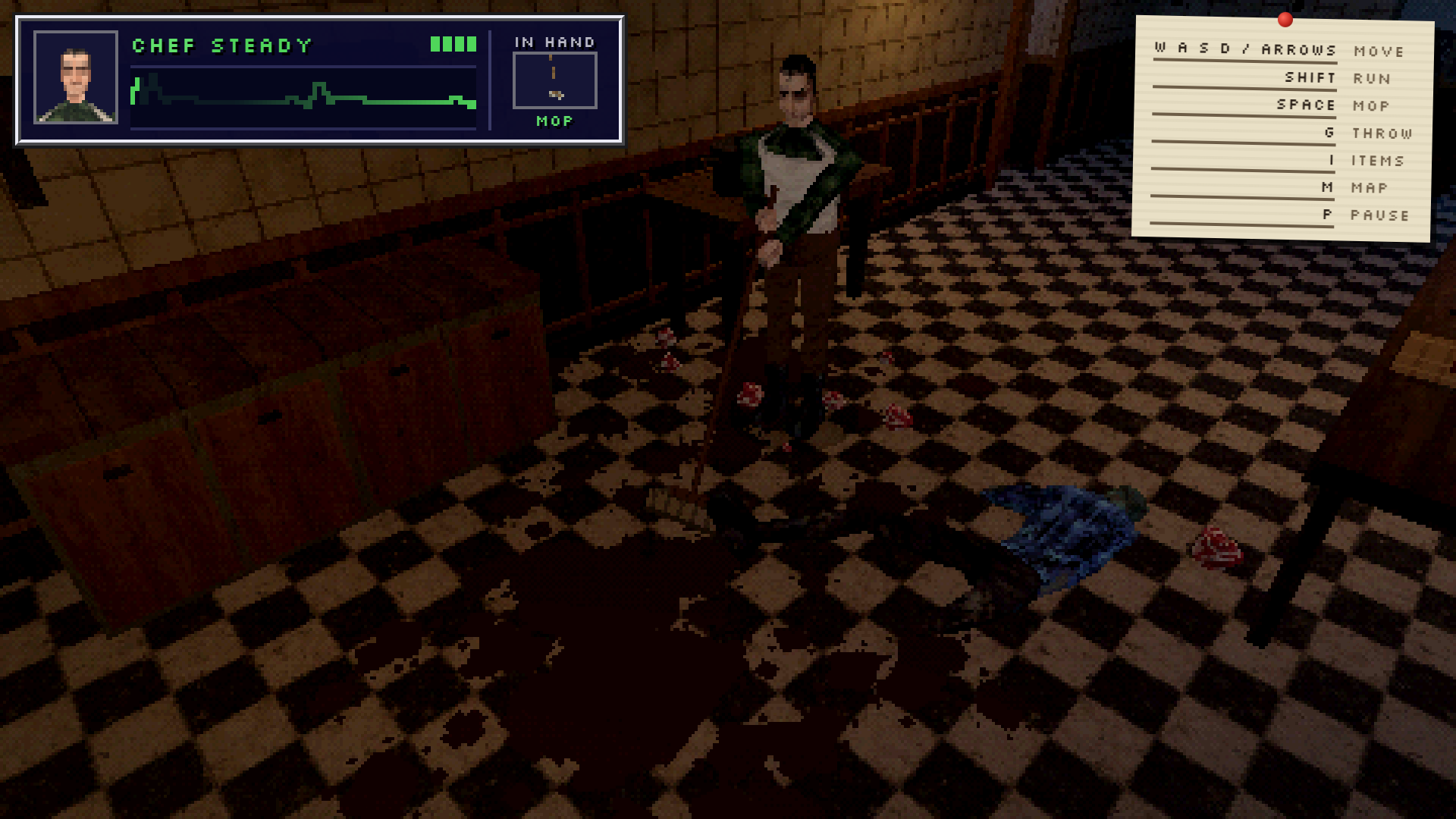
Gourmet Zombie started years ago as an illustrated fiction, Toufic, the Epicurean Zombie. An epicurean zombie? Isn’t that a contradiction in terms? Don’t zombies eat anything? The answer was a chain of adjustments. Toufic hasn’t fully turned yet, so he still has his palate. He’s a mort vivant! What he eats are humans who are infected but not yet turned, which we call truffles. And every well-made dish delays his conversion, so cooking becomes a bet on his humanity. All of these ideas were born to hold up the premise of an epicurean zombie. This Halloween we’re releasing Gourmet Zombie for free on Steam.
Adjustment ideas are obsession at work inside the work. What comes back, what insists, what refuses to let go of an idea just because there’s friction. If the dissection table is where your obsessions meet, the stake is what forces them to grow.
That’s where an interesting tension appears. When exploring is free, that extra work of adjustment becomes optional. Why force an idea that resists when you can generate one that doesn’t? Why build scaffolding when you can just plant next to it? The problem is that the idea that doesn’t resist is usually the most probable one. Every time you abandon a hard branch for an easy one, you take one more little step toward the crab.
You can keep going deeper, of course. But what grows that way isn’t trees, it’s a row of sprouts. A concatenation: this, and this, and then this other thing. Things that add up but don’t hold each other up, merely juxtaposed. Plants that aren’t sturdy, only adjacent.
And this isn’t about giving up the garden. It would be absurd to have every path at hand and refuse to walk them. It’s about knowing when to stop exploring and pick one. And once you’ve picked it, treating it as if there were no other: holding it up, forcing it, giving it guides, letting it get weird.
Weirdmaxxing isn’t just about starting from a strange place. It’s an act of resistance when things get hard. Now that artificial intelligence lets us see the forest, it’s time to focus on the tree.